Best LED Face Masks of 2026: Our Top 5 Picks
We compared 40+ LED face masks across wavelengths, light modes, LED coverage, fit, controls, session time, warranty, and overall value before narrowing the list down to our Top 5 picks.
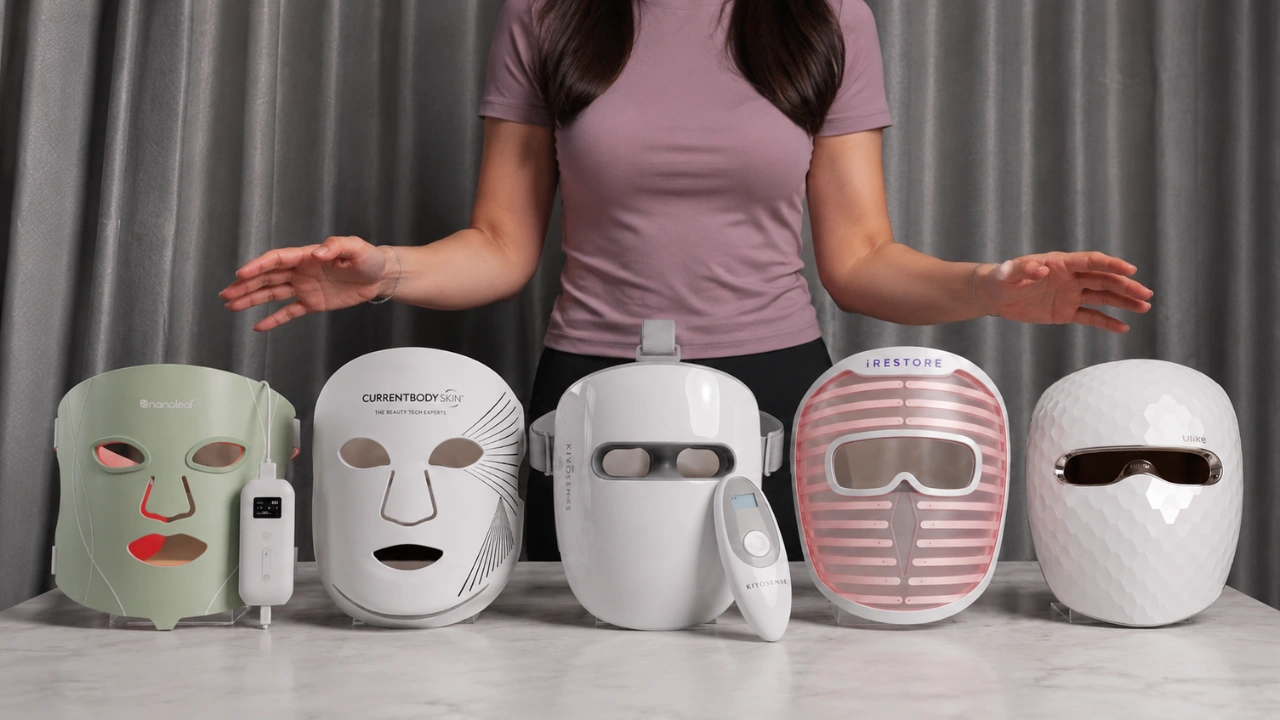
Top 5 LED Face Masks Of 2026
KIYOSENSE LUMINO PRO
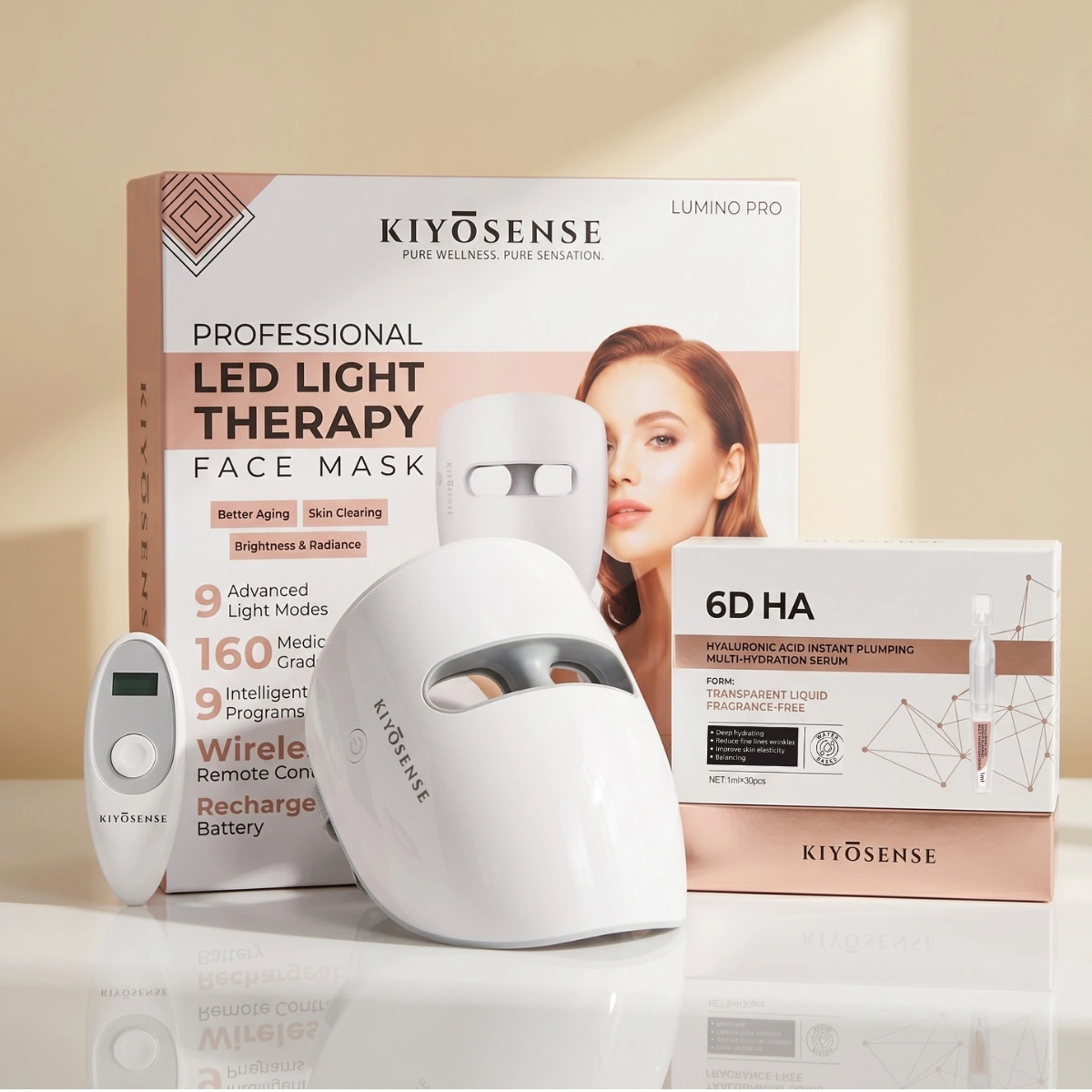
LUMINO PRO earns the top spot by covering more ground than anything else here — the widest light range in this lineup, full-face LED coverage, and one-touch wireless control you can use hands-free. It arrives complete — LED mask, 6D Hyaluronic Serum, and dual-strap fit in one box — so there's nothing extra to buy to start your routine.
Pros
- 160 LEDs for full-face coverage.
- FDA-cleared LED technology.
- OBPS™ one-touch wireless control.
- RF Skin Sensor for consistent positioning.
- Dual Strap Support for a secure fit.
- Free 6D Hyaluronic Serum for post-LED sessions.
- 180-day guarantee plus up to 2-year warranty after registration.
Cons
- Not sold on major marketplaces.
- Duo costs more upfront than Solo.
LUMINO PRO Packages
Glokore LED Face Mask
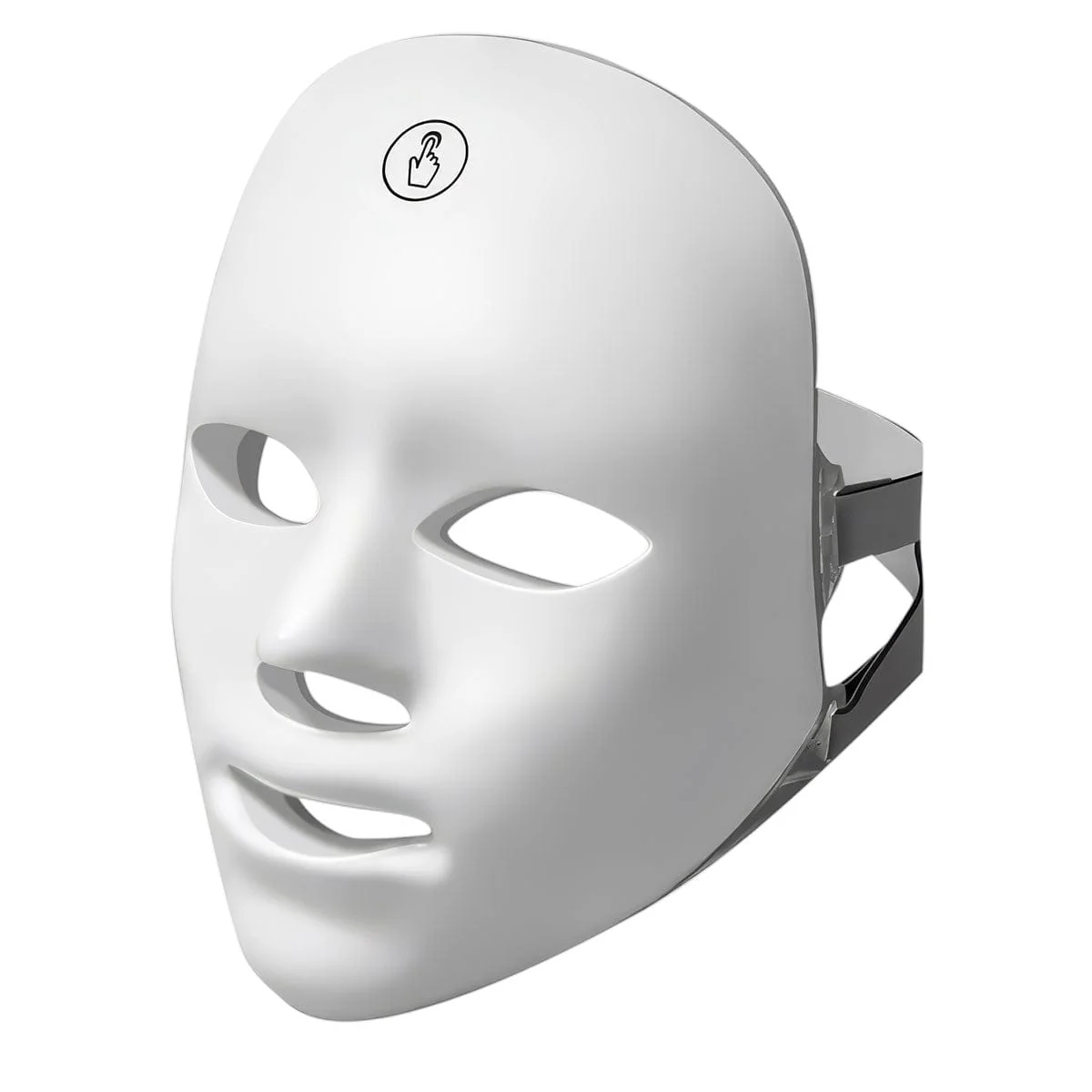
Glokore moves into the #2 position as the value-focused runner-up. It combines seven light settings, seven wavelengths, cordless hands-free use, and a simple 10-minute session format. It offers broad routine variety, while LUMINO PRO remains ahead for its wider nine-mode system, wireless controls, and complete mask-plus-serum package.
Pros
- Seven light settings and seven wavelengths.
- Cordless, hands-free mask design.
- Simple 10-minute session format.
- 60-day money-back offer.
Cons
- No separate handheld remote or controller is advertised on the current product page.
- Recent customer feedback includes reports of charging problems and some units failing earlier than expected, so long-term durability is less proven than premium competitors.
- Construction and controls are more basic than the higher-priced structured masks in this comparison.
iRESTORE Illumina

iRESTORE Illumina takes the #3 position with a high stated LED count and a structured full-face format. Its red, blue, and infrared options keep the routine straightforward, but its package is centered on the mask itself rather than a mask-plus-skincare system.
Pros
- High stated 360-LED configuration for broad full-face coverage.
- Structured full-face design keeps the array in a defined position.
- Red, blue and infrared options in a single device.
- Simple 10-minute session format.
Cons
- Premium price — currently around $399 on the official site.
- Only three treatment modes, so there is less light-mode flexibility than broader multi-mode masks.
- The included manufacturer warranty is only one year; extending coverage to three years costs extra.
- A separate battery controller is still part of the setup rather than fully integrated on-mask controls.
Ulike ReGlow
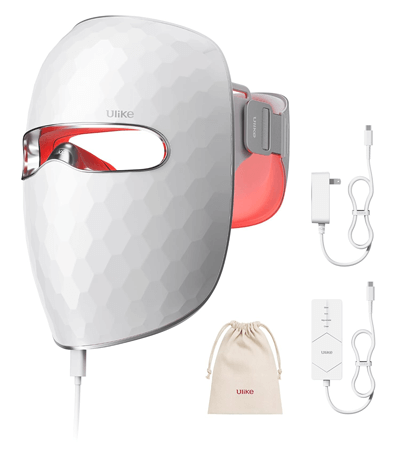
Ulike ReGlow takes the #4 position with four predefined guided modes, a structured design, and a 272-LED configuration. It is a polished guided-routine option, although its package is focused on the mask rather than adding a skincare serum.
Pros
- Four predefined guided modes for simple selection.
- 272-LED configuration for even coverage.
- Structured mask format holds its shape.
- Tap-and-go controller — no manual adjusting.
Cons
- Premium-priced before promotions, despite offering only four guided treatment modes.
- The rigid hard-shell design may feel tight on some face shapes and can leave pressure marks or indentations.
- The bulky shell is less convenient to store or travel with than a flexible silicone mask.
- The remote control must be plugged into the mask during use rather than using fully integrated wireless controls.
CurrentBody Skin LED Mask Series 2
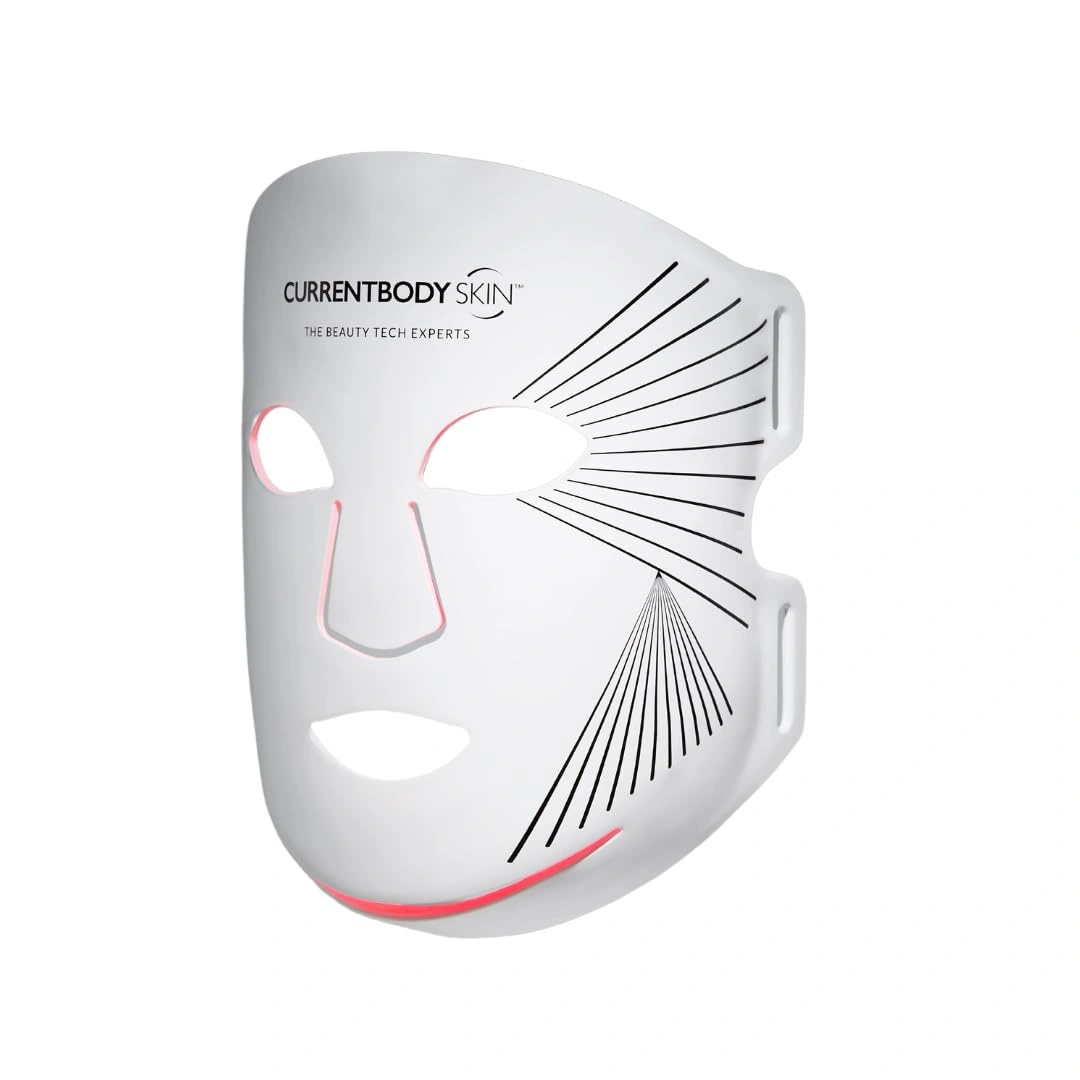
CurrentBody Series 2 takes the #5 position with a focused red and near-infrared setup in a flexible silicone format. It may suit shoppers who value close facial contouring and a simple 10-minute routine, but the package does not add a skincare serum.
Pros
- Flexible silicone design contours closely to the face.
- Combines listed 633nm, 830nm and 1072nm wavelengths.
- Focused red and near-infrared setup.
- Simple 10-minute session format.
Cons
- One of the most expensive masks in this comparison — around $469.99 on the U.S. site.
- No control over individual settings: the Series 2 uses one fixed red + near-infrared treatment program.
- A full charge can take about 4.5 hours.
- No blue, yellow, green, or other selectable light modes, making it less versatile for shoppers wanting a multi-concern routine.
KIYOSENSE LUMINO PRO vs Glokore LED Face Mask
Both offer multiple light options, but they take different approaches. Here are the specifications, controls, session format, and package differences that separate them.
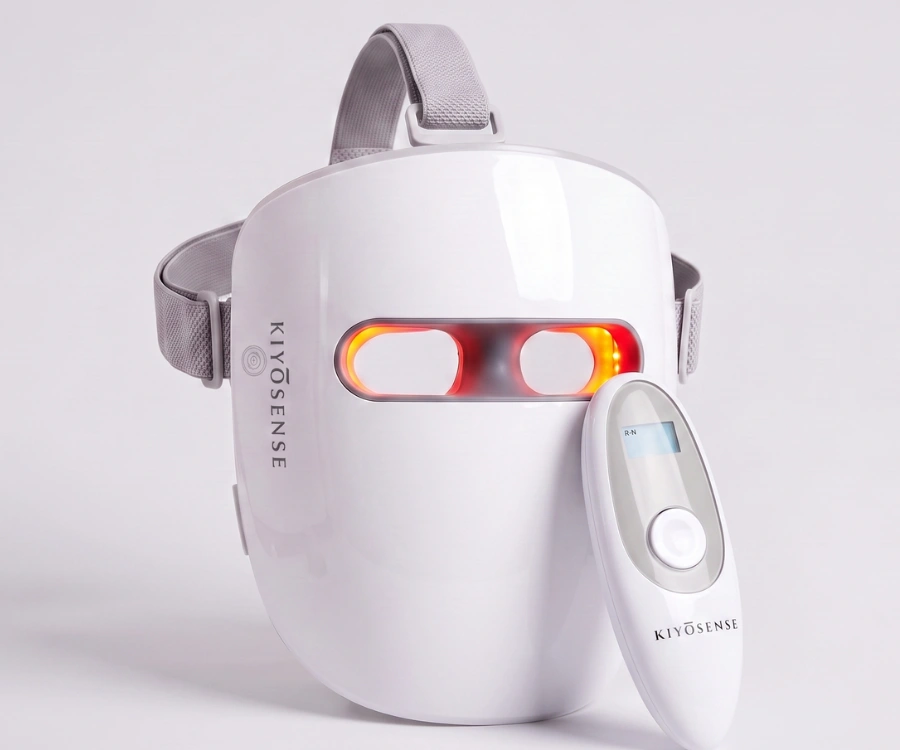
KIYOSENSE LUMINO PRO
Best for wavelength variety, wireless control, adjustable fit and package extras.
Glokore LED Face Mask
Best for value-focused shoppers wanting seven light settings, cordless use, and a simple 10-minute routine.
Why KIYOSENSE ranks #1: Glokore offers seven light settings, cordless use, and a simpler value-focused setup, while LUMINO PRO offers nine selectable wavelengths and modes, wireless OBPS control, additional fit features, shorter-session flexibility, and included serum packages.
Product specifications, included items, warranties, prices and availability can change. Review current product information before purchasing.
How to Choose the Right Red Light Therapy Mask
The best mask is not simply the one with the most LEDs or the highest price. Compare the specifications, controls, fit, build quality, session format, documentation, and warranty before deciding.
1. Check the Exact Wavelengths
Look for specific wavelength values in nanometers rather than broad terms such as “red” or “infrared.” Clearly stated values such as 630 nm, 660 nm, 830 nm, and 850 nm make different masks easier to compare.
2. Compare Selectable Modes
Some masks use only a few preset combinations, while others allow individual light modes. More modes provide more flexibility, but simpler controls may be preferable if you want a straightforward routine.
3. Look Beyond LED Count
A larger LED number does not automatically make one mask better. Coverage, spacing, wavelengths, controls, fit, session format, and overall construction also matter when comparing devices.
4. Check Fit, Quality & Durability
Compare rigid versus flexible designs, strap systems, hinges, controllers, connectors, and overall material quality. The mask should fit securely and feel sturdy enough for repeated regular use.
5. Compare the Controls
Built-in buttons, wired controllers, and wireless remotes offer different levels of convenience. Masks with several modes are usually easier to use when the controls are simple and clearly labeled.
6. Check the Session Format
At-home masks commonly use short sessions, but timing varies by device. Compare the stated session length and choose a format that realistically fits your routine while following the manufacturer's directions.
7. Review the Device Information
Look for clear specifications, usage instructions, intended use, eye-safety information, contraindications, and any stated regulatory clearance. Good documentation makes a device easier to evaluate.
8. Compare Warranty & Return Terms
Check the return window, standard warranty, registration requirements, replacement terms, and exclusions. These details matter more as the price of the device increases.
Customization or Simplicity?
One of the easiest ways to narrow the list is to decide how much control you actually want from the mask.
Quick Buying Checklist
Before buying an LED face mask, check these details.
- Are the exact wavelengths clearly stated in nm?
- How many selectable modes are available?
- Does the LED layout provide practical facial coverage?
- Does the fit, material quality, and construction appear durable?
- Are the controls simple to reach and understand?
- Does the session length fit your routine?
- Are instructions and safety information easy to find?
- What are the return and warranty terms?
Red Light Therapy Mask FAQs
Quick answers about wavelengths, LED count, modes, session length, build quality, controls, and how we compare at-home masks.
What should I compare first when choosing a red light therapy mask?
Start with the exact wavelengths, selectable modes, LED layout, fit, controls, session length, build quality, device documentation, warranty, and return terms. No single specification should decide the purchase.
Does a higher LED count automatically mean a better mask?
No. LED count is useful, but it does not explain wavelength selection, spacing, coverage, controls, comfort, build quality, or session format. It should be considered as one part of the overall device design.
Why are wavelengths written in nm?
Nanometers identify the specific wavelength of light. Publishing exact values such as 590 nm, 630 nm, 633 nm, 660 nm, 830 nm, 850 nm, or 1072 nm makes masks easier to compare and also matches how wavelengths are reported in published research.
What is the difference between red and near-infrared light?
They are different wavelength ranges. Facial LED studies commonly evaluate red wavelengths around 630–660 nm and near-infrared wavelengths around 830–850 nm, sometimes in combination. Results depend on the full study protocol, not wavelength alone.
Do I need a mask with many light modes?
Not necessarily. More modes provide more customization, while fewer modes can make a device simpler to operate. Check whether the modes are actually selectable and whether the manufacturer clearly identifies the wavelengths used.
How long should a home LED-mask session be?
There is no universal session time for every mask. Published protocols use different wavelengths, irradiance, dose, frequency, and treatment duration. Follow the instructions for the specific device you own.
What should I check for quality and durability?
Look at the mask material, strap system, hinges, controllers, cable or wireless components, connectors, and overall construction. Also review the warranty and replacement terms because they provide useful context when comparing higher-priced devices.
Why does KIYOSENSE LUMINO PRO rank #1 on this page?
Our ranking gives LUMINO PRO the top position because of its combined feature set: 160 LEDs, nine stated wavelengths, nine selectable modes, 830 nm and 850 nm NIR options, wireless OBPS control, RF skin-contact sensor, dual + overhead straps, 5–10 minute sessions, included 6D HA serum, and its stated warranty and return package.
General Educational Sources
Broad references covering red light, near-infrared light, LED use, general terminology, and at-home device considerations.
American Academy of Dermatology — Red Light Therapy
General dermatologist-reviewed background on at-home red-light devices, expectations, FDA terminology, and precautions.
Cleveland Clinic — LED Light Therapy
General information about LED light therapy, at-home use, instructions, possible limitations, and safety considerations.
Red & Near-Infrared Light Study
A published source discussing defined light parameters in a specific setting.
Photobiomodulation Review
Broad background on terminology, proposed mechanisms, applications, and published information.
LED Phototherapy Review
General background on LED light use and commonly discussed wavelength categories.
Red LED Exposure & Human Skin
A published source discussing defined red-LED exposure conditions.